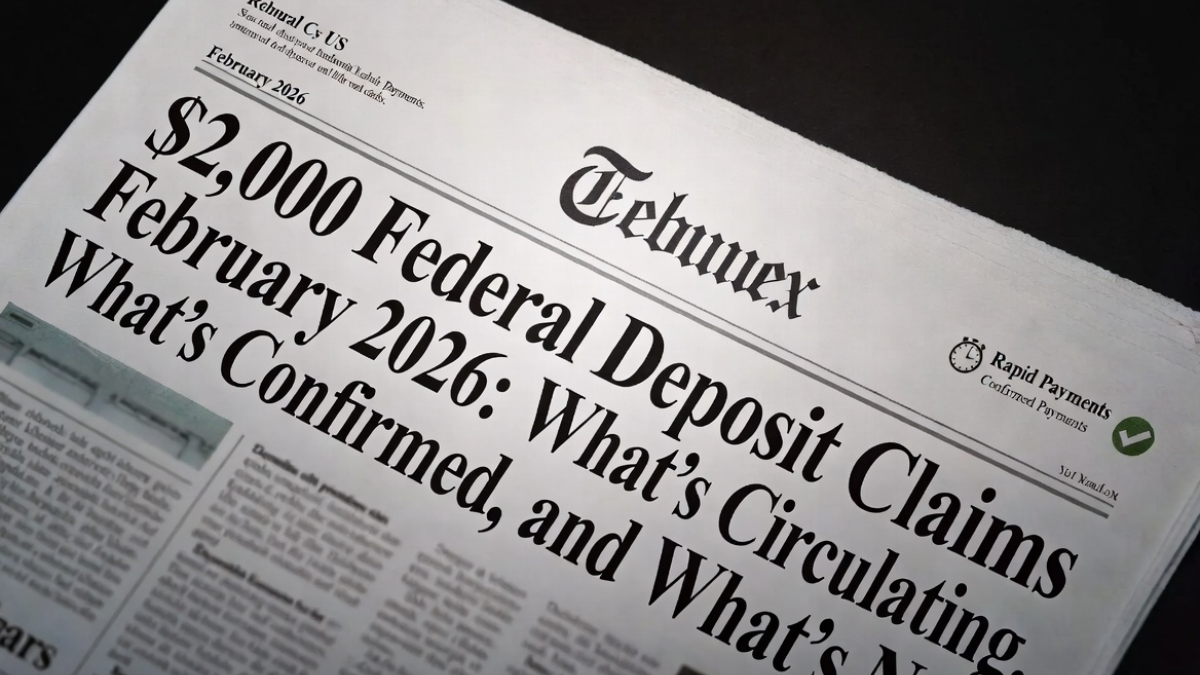
Social media feeds are once again buzzing with claims of a $2,000 federal deposit arriving in February 2026. Viral posts, bold thumbnails, and urgent headlines are driving massive attention, leaving many Americans wondering whether they should expect money in their bank accounts.
Before making financial decisions based on trending claims, it is important to separate speculation from verified information. Here is a clear breakdown of what is circulating, what has been officially confirmed, and what remains unverified.
What Is Circulating Online Right Now
Across various platforms, posts are claiming that a $2,000 federal payment has been approved for widespread distribution in February 2026. Some versions suggest it is a new stimulus payment, while others imply it is tied to tax refunds or benefit increases.
Many of these claims reference economic hardship, inflation pressures, or past federal relief programs to make the narrative feel realistic. However, viral circulation does not automatically mean official approval.
What Federal Agencies Have Actually Confirmed
As of now, neither the Internal Revenue Service nor the Social Security Administration has announced a new universal $2,000 federal deposit for all Americans in February 2026.
The IRS continues to process tax refunds based on individual returns, and Social Security payments follow established monthly schedules with standard cost of living adjustments. No nationwide bonus or one time $2,000 payment has been formally approved through official channels.
Any large scale federal payment would require legislative action and public confirmation before funds are distributed.
Why the $2,000 Figure Keeps Appearing
There are several reasons the $2,000 number is trending:
Some taxpayers may receive refunds near that amount depending on credits and withholding.
Social Security or SSI adjustments can vary by recipient, creating confusion when individual deposits are discussed online.
Past stimulus checks during earlier economic crises set a psychological benchmark that resurfaces during financial uncertainty.
Old headlines are often reshared without updated context, making them appear current.
When partial information is combined with speculation, it can quickly turn into a viral narrative.
How Federal Deposits Actually Work
Federal payments are not issued randomly. Tax refunds are processed after returns are filed and verified. Social Security and SSI benefits follow structured eligibility rules and fixed payment calendars.
If a new relief package were approved, it would involve congressional legislation, formal agency announcements, and clearly published eligibility criteria.
Without those official steps, claims remain unverified.
Risks of Believing Unconfirmed Payment Claims
Whenever rumors about large federal deposits trend, scammers often exploit the situation. Fraudulent messages may ask recipients to confirm personal information or click links to “claim” funds.
Legitimate federal agencies do not request sensitive information through random emails or text messages promising immediate payment.
Verifying information directly through official government sources is the safest approach.
What Americans Should Watch Instead
Rather than focusing on viral posts, taxpayers and beneficiaries should monitor official updates from federal agencies. Confirmed policy changes are publicly announced and widely covered by reputable news outlets.
If any new federal payment were to be approved in 2026, it would be clearly communicated before distribution begins.
Conclusion
The $2,000 federal deposit claims circulating in February 2026 are generating significant online attention, but no official confirmation supports a new universal payment at this time. Tax refunds and regular benefit payments continue under existing rules and schedules.
Staying informed through verified sources can help Americans avoid misinformation, financial disappointment, and potential scams.
Disclaimer: This article is for informational purposes only. Federal payment programs and policies may change based on official government decisions and legislative action.